


Most warehouse leases only move one direction: up. You sign for more space than you need, lock in for three years, and hope your business grows into it. If it doesn't — if volume drops, a product line slows down, a side business dries up — you're still paying for square footage you're not using.
Top Nutrition House has spent years going the other direction at its Cubework warehouse in Walnut, CA. Its space has grown when the business grew, and shrunk when it didn't. Same landlord. Same lease relationship. No penalty for scaling down.
Most commercial landlords structure leases around one assumption: your business only moves forward. Multi-year terms assume your space needs hold steady for years at a stretch. If your volume spikes, you're stuck waiting out the lease to get more room. If it drops, you're stuck paying for space you no longer need — and ending that space early usually means a long notice period, regardless of which direction you're moving.
That works fine for a business with a flat, predictable growth curve. It doesn't work for a business that runs on cycles — inventory buys that come in waves, service lines that ramp up and wind down, markets that shift under you in a matter of months.
Shrinking businesses hit the same wall growing ones do. A business that's shrinking, restructuring, or simply moving on from a side line runs into a lease signed for a size that no longer matches reality, and the landlord has no reason to change it. The tenant absorbs the cost of a business decision the landlord never had to make.
Top Nutrition House runs two lines of business out of its Walnut space: buying liquidated and returned inventory from other warehouses, sorting it, and reselling it to wholesale buyers; and handling Amazon-related logistics support for cross-border ecommerce sellers who need a domestic pickup point. Neither line moves in a straight line. Inventory buys come in waves. Ecommerce shipping volume rises and falls with the broader market. Some months call for more room. Others call for less. A handful of years running a business like this teaches you that space needs are never really settled — they're always mid-adjustment.
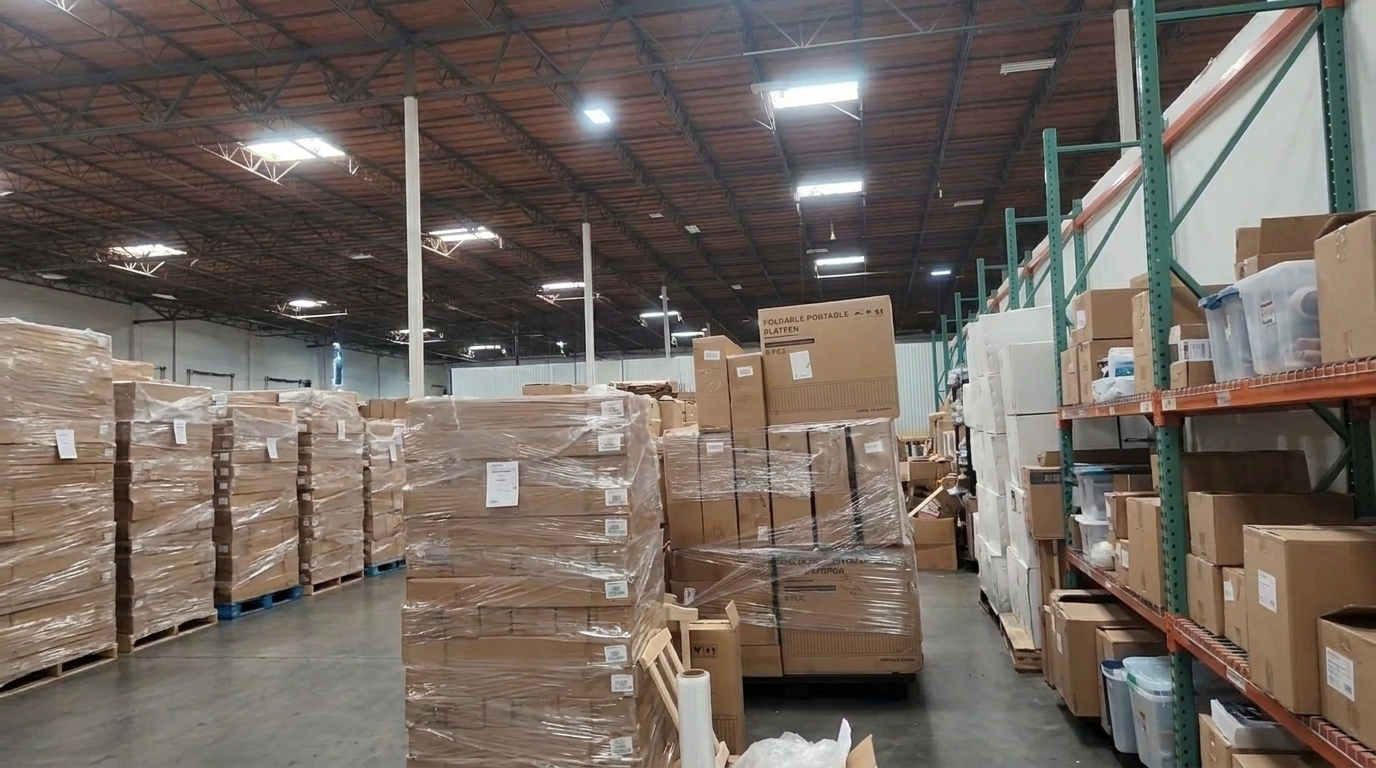
The past couple of years haven't been easy for anyone running a cross-border ecommerce or small-parcel logistics operation. Rising tariffs and tighter consumer spending have slowed cross-border sales well below the pace many operators got used to right after the pandemic. A lot of businesses in this space have spent this stretch shrinking their footprint.
Top Nutrition House's space needs never stayed still against that backdrop. At one point, a container deconsolidation business it ran alongside its main operations pushed its footprint well beyond what it normally needed — enough extra room to bring in additional help just to keep up. Then that business line slowed along with the broader market, and the company shut it down. The extra room it no longer needed didn't disappear on its own — on a standard commercial lease, it would have kept paying for space tied to a business line that no longer existed, for as long as the lease term still had left to run.
Instead of holding Top Nutrition House to a multi-year lease sized for its peak, Cubework worked with the company to bring its footprint back down as its needs changed. It happened more than once — each adjustment worked out as a change to its existing agreement rather than a new lease.
The owner put it simply, in his own words:
When my business scaled up, they let me expand. When it scaled back down, they helped me shrink the space too — they've always worked with me.
Ask most operators why they picked a warehouse, and you'll get an answer about ports, freeways, or freight lanes. Those factors matter here too, but the company's first answer is something else entirely.
He lives close to the Walnut facility. Before that, his daily commute meant fighting traffic into downtown Los Angeles — hours a week he describes as time he'll never get back. Once his operation moved to a location near home, that commute disappeared. He comes in on weekends now too, since the drive takes minutes instead of a fight through traffic. Checking on inventory, meeting a buyer, handling a shipment — none of it requires planning around rush hour anymore.
That's a detail that rarely makes it into a warehousing case study — a business owner choosing a location that fits his life as much as his freight lanes. Location decisions get written up as spreadsheet exercises — drive time to the port, proximity to major highways, access to a labor pool. Those factors matter. But for a small operator running the business himself, day to day, sometimes the real answer is simpler: he wanted his weekends back, and a facility close to home did exactly that.
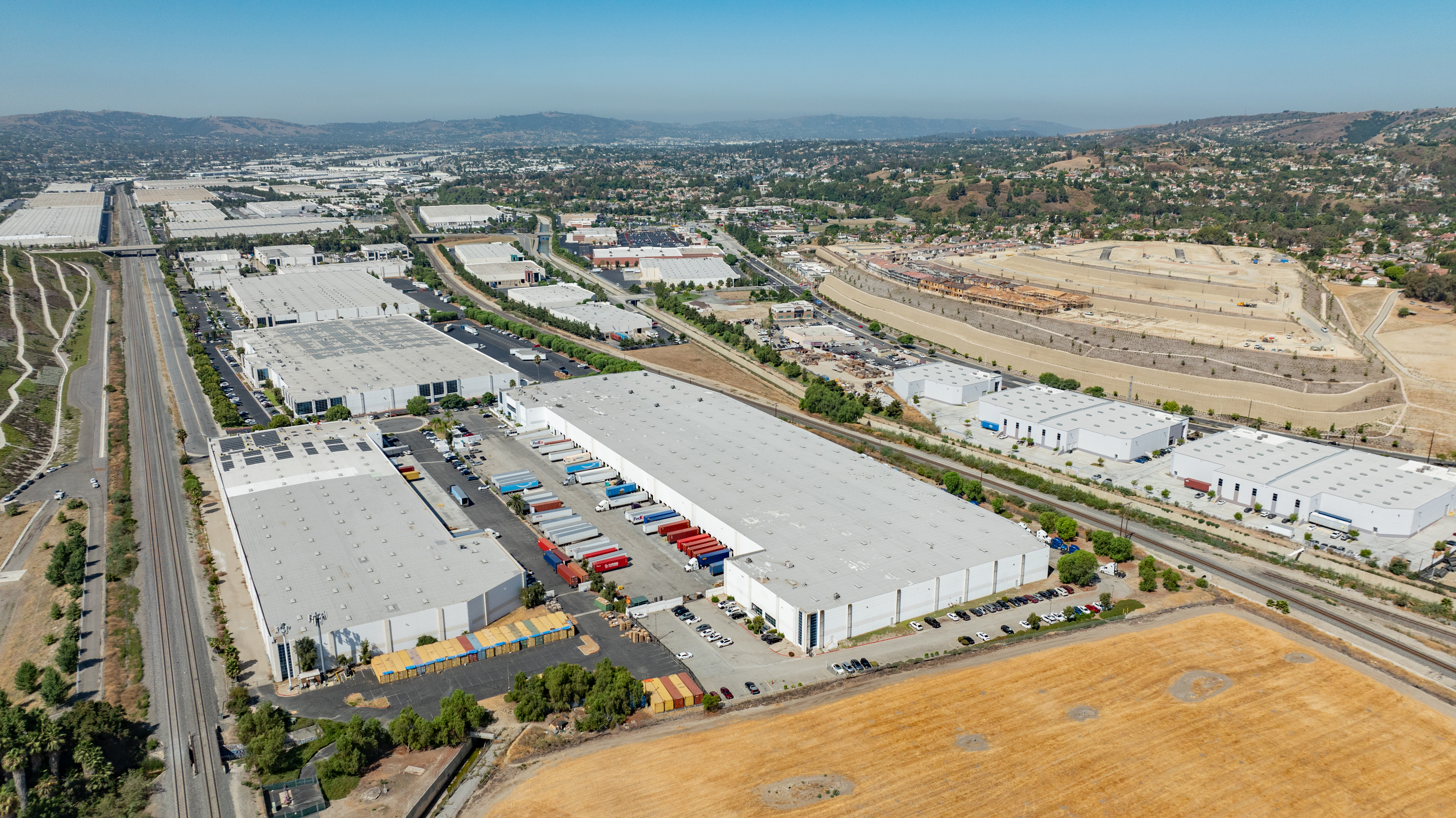
Flexible leasing gets used as a selling point everywhere. What's harder to find is proof that it actually plays out that way when a real tenant's business gets messy — when volume drops for reasons that have nothing to do with the landlord, and the tenant needs the lease to bend without a fight.
This case is that proof. A tenant whose business runs in cycles. A landlord who adjusted the lease each time those cycles turned. Just a lease that moved with the business it was written for.
"Month-to-month" and "scalable space" show up here in practice — in how a landlord actually responds when a tenant needs less room, not just when they want more.
See why other businesses chose Walnut for flexible warehousing →
Read how another tenant found flexible space and fast shipping →
Do I have to renegotiate my whole lease every time I need more or less space? No. Space adjustments are typically handled as an amendment to your existing agreement — same relationship, same terms, just resized to match what you need. Exact process varies by facility, so confirm the specifics with your leasing contact.
Is there a penalty for downsizing before my lease term ends? Every agreement is different, so check your specific terms. But the flexible lease model is built around the expectation that space needs change — a reduced footprint is generally treated as a normal adjustment under those terms.
How much notice do I need to give before reducing my space? This varies by facility and by how much space you're giving up, so it's worth confirming directly with your property team. In general, flexible operators build in shorter notice windows than a standard multi-year commercial lease requires.
Can I scale down and then scale back up later if my business picks back up? Yes — that's the point of a flexible lease. Tenants can reduce their footprint when volume drops and expand again later, without starting the relationship over.


Loading comments...